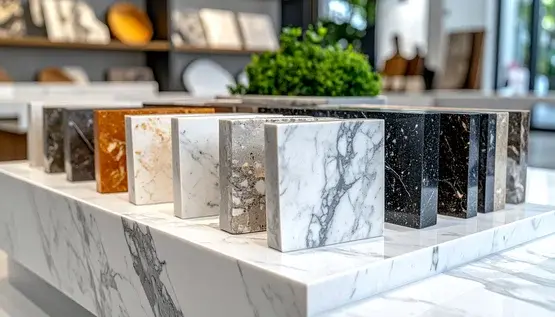
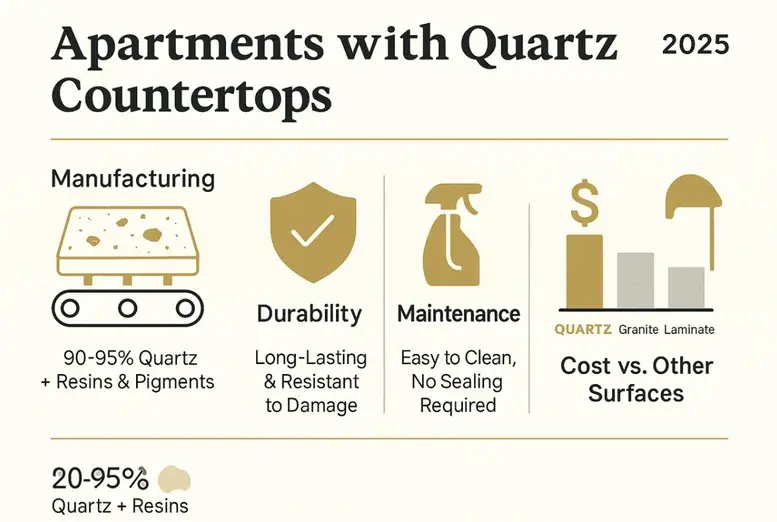
Quartz countertops are outperforming laminate in Calgary multi-suite builds, and the reasons go far beyond esthetics. Composed of 93-95% quartz combined with polymer resins, this engineered stone delivers a non-porous surface that resists stains, scratches, and bacteria without requiring sealing. For property developers and investors, understanding the quartz vs laminate countertops pros and cons matters for long-term profitability. We’ve analyzed 2026 data to show why choosing quartz over laminate in Calgary quartz countertops installations reduces replacement costs, cuts maintenance expenses, and ultimately delivers superior ROI for multi-suite properties.
Rental kitchens absorb more punishment than owner-occupied homes. Tenants move appliances without floor protection, drop cookware on counters, and clean surfaces with whatever products sit under the sink. Property managers see this pattern repeatedly: surfaces that look pristine at installation show significant wear within the first lease term.
The cost structure of multi-suite buildings magnifies these durability concerns. Replacing countertops in a single-family home disrupts one household. Replacing them across 20, 50, or 100 units requires coordinated scheduling, bulk material procurement, and extended contractor availability. Consequently, the replacement decision carries far more weight in multi-suite developments than in residential projects.
Maintenance calls from tenants represent another financial drain. Water damage from improper sealing, burns from hot cookware, and chips from impacts all generate work orders. Each service call costs money in labor, materials, and administrative overhead. Materials that withstand daily abuse without requiring intervention protect both the operating budget and the property manager’s time.
Quartz vs Laminate: Impact Resistance Comparison
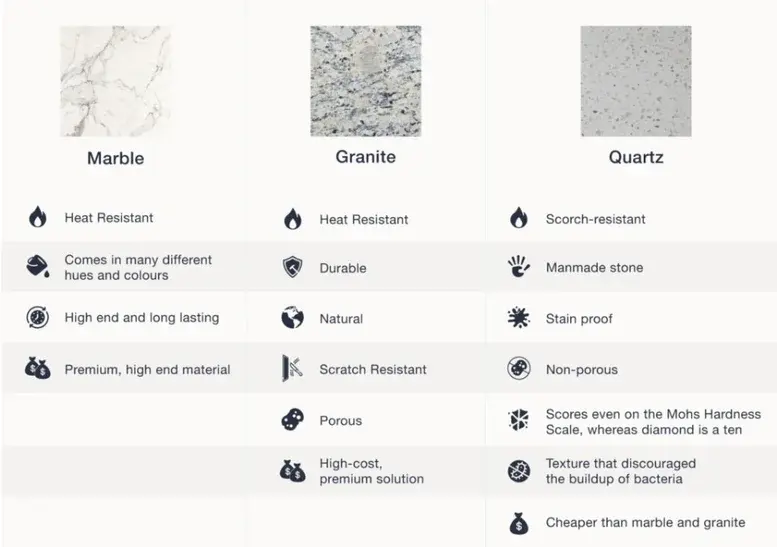
Quartz earns its durability reputation through engineered composition. Rating approximately 7 on the Mohs hardness scale, quartz surfaces resist scratching, chipping, and impact damage that accumulates over years of kitchen use. The material combines roughly 90% natural quartz crystals with 10% polymer resins and pigments, creating a surface that leverages natural stone hardness while adding consistency.
Laminate countertops follow a completely different construction method. Multiple layers of kraft paper saturated with phenolic resins form the base, topped with a decorative layer and protected by clear melamine. This layered structure creates inherent limitations for long-term durability. The decorative layer wears through with heavy use, particularly around sinks and preparation areas. Once this protective layer fails, underlying materials become vulnerable to staining, moisture damage, and further degradation.
Impact resistance separates these materials in rental applications. Dropped pans, knife slips, and heavy use barely mark quartz surfaces. Laminate, on the other hand, chips, dents, or scratches around edges and seams. The solid composition of quartz means repairs, when necessary, tend to be durable and nearly invisible. Light scratches can be polished and buffed out, while deeper scratches respond to custom repair with matching epoxy fillers.
2026 Data on Replacement Frequency
Most quality quartz installations provide 25-30 years of excellent performance with minimal maintenance, and many continue performing well beyond these timeframes. The material maintains both appearance and hygiene properties throughout its service life without periodic sealing or special treatments.
Laminate countertops typically provide 10-15 years of acceptable service when properly maintained, though their appearance and functionality begin declining much sooner in high-use environments. In rental properties specifically, laminate can last between 10 and 20 years if properly installed and cared for, but performance deteriorates faster under typical tenant use.
The failure modes tell different stories. Moisture penetration at seams, edges, and cut-outs represents the most common failure for laminate surfaces. Once moisture reaches substrate layers, swelling, delamination, and bacterial growth quickly compromise the entire surface, requiring complete replacement rather than repair. Heat damage poses another significant limitation. Contact with hot cookware causes immediate and permanent damage including burns, discoloration, and bubbling that cannot be repaired.
Laminate edges and seams represent particular weak points that often fail before main surface areas. Moisture infiltration, impact damage, and normal expansion and contraction cause edge lifting and seam separation. These vulnerabilities mean laminate surfaces frequently require repair or replacement due to edge and seam failures rather than overall surface wear.
ROI Analysis for Calgary Builders
The financial comparison extends beyond initial purchase price. In 2026, builder-grade quartz from domestic manufacturers typically runs CAD 55.73 to CAD 83.60 per square foot installed. Premium collections with elaborate vein patterns push toward CAD 111.47 to CAD 139.34. Laminate installation ranges from CAD 27.87 to CAD 41.80 per square foot for standard options, with premium products reaching CAD 55.73 to CAD 83.60 installed.
For a standard 30 square foot kitchen counter, quartz installation costs approximately CAD 1,671.90 to CAD 2,508 at builder-grade pricing. Laminate installation for the same area runs CAD 836.10 to CAD 1,254. The initial price gap appears substantial, but the lifecycle calculation shifts these numbers.
Quartz installations providing 25-30 years of service prove more cost-effective per year than laminate installations requiring replacement after 10-15 years. A CAD 2,000 quartz installation serving 27 years costs roughly CAD 74 annually. A CAD 1,000 laminate installation replaced after 12 years costs CAD 83 annually, plus the disruption and coordination expenses of a second installation.
Professional installation adds CAD 41.80 to CAD 69.67 per square foot to countertop projects. Multi-suite builders benefit from bulk pricing on both materials and labor, but the replacement coordination costs remain. Scheduling contractors across multiple units, managing tenant access, and handling the logistical complexity of staged replacements add hidden expenses that single-replacement materials avoid.
Quartz installations can support a rent increase of CAD 69.67 to CAD 200 per month, representing approximately 3 to 15% premium depending on comparable units in the area. This rental premium compounds over the material’s 25-30 year lifespan. Even at the conservative end, a CAD 70 monthly premium generates CAD 840 annually, recovering the initial cost differential within 2-3 years while continuing to deliver returns for decades.
Property managers cite faster leasing and stronger first impressions during showings as additional benefits. Units with quartz countertops lease faster than identical units with laminate, reducing vacancy costs that erode multi-suite profitability.
Non-Porous Surface Eliminates Tenant Maintenance Issues
The non-porous composition of quartz creates a sealed surface that liquids cannot penetrate. Common kitchen substances including coffee, wine, and cooking oils remain on the exterior where they can be wiped away cleanly before causing permanent damage. This resistance stems from the engineering process that combines quartz crystals with resin binders, filling microscopic gaps to create a completely solid surface.
Laminate countertops present a different stain profile. While the top layer offers waterproof protection, damage to this protective layer or penetration at seams allows staining substances to reach porous substrate materials. Once staining agents penetrate beyond the surface layer, removal becomes impossible and replacement becomes the only solution.
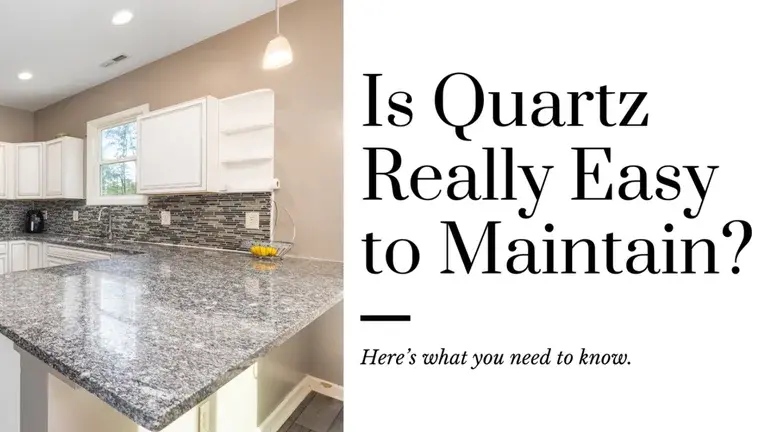
The distinction between stain-resistant and stain-proof matters for realistic expectations. Quartz admirably resists staining under typical household conditions, but extended exposure to highly pigmented substances or harsh chemicals can challenge its defenses. Prompt cleaning with mild soap and water maintains the surface integrity that makes quartz countertops outperform laminate countertops.
For property managers, this translates to fewer disputes over security deposits and reduced replacement costs between tenants. Coffee spills, wine accidents, and cooking mishaps wipe clean without leaving permanent marks that would otherwise generate conflict during move-out inspections.
Reduced Maintenance Calls and Costs
Quartz surfaces require only daily cleaning with mild soap and water. The non-porous nature eliminates the need for periodic sealing, special treatments, or professional maintenance services that some materials demand[91]. Property managers can include simple care protocols in move-in materials, standardizing maintenance across all units.
Laminate maintenance demands more careful handling to prevent damage and extend lifespan. Avoiding heat damage, preventing moisture infiltration at seams, and addressing minor damage promptly require ongoing attention that generates service calls. Each maintenance request costs money in labor, materials, and administrative overhead that erodes multi-suite profitability.
The responsibility split for quartz proves straightforward. Tenants handle wiping down after meal prep and dealing with spills, which requires no more effort than cleaning any other countertop. Property management teams avoid the recurring costs associated with sealing, specialized cleaning products, or professional services.
Independent testing demonstrates these surfaces maintain appearance and functionality for decades with basic care. This durability through minimal maintenance cuts ongoing property management expenses that accumulate over the lifecycle of multi-suite developments. Consequently, the reduced maintenance calls and associated costs represent a measurable advantage when evaluating quartz over laminate for rental properties.
Hygiene Standards in Rental Properties
Alberta’s Minimum Housing and Health Standards establish requirements to protect occupant health and well-being. These standards mandate conditions essential to good health, making housing premises safe, sanitary, and fit for human habitation. Regional Health Authorities enforce compliance through inspections by public health officers.
Quartz surfaces naturally resist bacteria and mold growth due to their non-porous composition. The smooth surface creates an ideal preparation space that won’t absorb cooking odors or harbor bacteria. Scientific research on countertop hygiene supports what property managers observe: non-porous surfaces create healthier living spaces.
Mold can technically grow on any surface, including non-porous materials, but growth occurs far more slowly on quartz than on porous alternatives. Similarly, the non-porous nature makes removal significantly easier when cleaning becomes necessary. This resistance to bacterial and mold colonization helps properties meet hygiene standards while reducing health-related complaints from tenants.
Laminate’s vulnerability to moisture penetration at seams and damaged areas creates potential hygiene concerns. Once moisture reaches substrate layers, conditions favoring bacterial growth and mold development emerge. These issues not only compromise health standards but also generate remediation costs that impact operating budgets.
Tenant Satisfaction Metrics
Tenants in units with premium finishes like quartz tend to stay longer and take better care of the property overall. This extended tenure reduces turnover costs including cleaning, repairs, marketing, and vacancy periods that erode multi-suite returns. The correlation between upgraded finishes and tenant retention appears consistently across rental markets.
The ease of maintenance contributes directly to satisfaction. Tenants appreciate surfaces where morning coffee spills or evening wine splashes wipe away without panic about permanent staining. The smooth, non-porous surface that makes daily cleaning effortless creates a better living experience compared to materials requiring special care or showing permanent damage from normal use.
Property managers report fewer damage claims and improved relationships with tenants when units feature durable, low-maintenance surfaces. This reduction in friction between property management and residents creates a more positive rental experience that supports retention and referrals.
The financial benefits extend beyond initial rent premiums. Quality installations that resist staining, require minimal maintenance, and meet hygiene standards reduce the total cost of tenant management while improving satisfaction scores that drive lease renewals and referrals in competitive Calgary rental markets.
Zero Sealing Requirements Cut Ongoing Property Management Expenses
Natural stone countertops require periodic sealing to maintain their stain resistance and protective qualities. Granite installations receive an initial seal before installation, and the installation crew typically provides a cleaner/sealer kit for the next application, which needs to happen on an annual basis. In rental properties, materials requiring annual sealing almost certainly go unsealed through most tenancy cycles. Tenants lack the knowledge, motivation, or supplies to maintain sealing schedules, leaving surfaces vulnerable to the exact damage proper sealing prevents.
Quartz eliminates this maintenance requirement entirely. The non-porous engineered surface blocks liquids and stains without any sealing. No scheduled maintenance is required beyond daily cleaning, and property managers never need to budget for sealing services, materials, or tenant education about this process.
The annual investment for maintaining quartz countertops breaks down to cleaning supplies at CAD 69.67 to CAD 104.50 per year, microfiber cloths at CAD 27.87 to CAD 41.80 annually, and optional professional service at CAD 278.67 to CAD 557.34. Total annual investment ranges from CAD 97.54 to CAD 696.68. Most property managers skip professional services entirely, keeping annual costs under CAD 150 per unit with basic cleaning supplies that tenants typically provide themselves.
Compared to materials requiring sealing, quartz saves both the direct cost of sealant products and the labor expense of application. Professional sealing services charge per square foot, and coordinating these services across multiple rental units creates scheduling complexity that adds hidden costs beyond the service invoice itself.
Labor and Time Savings
Property managers prioritize surfaces that do not require frequent sealing or specialized cleaning, recognizing that maintenance simplicity directly impacts operational efficiency. Quartz surfaces require only mild cleaning products with no periodic sealing. This straightforward care protocol standardizes maintenance across all units without creating recurring tasks that consume property management time.
The labor savings compound across multi-suite developments. A property manager overseeing 50 units with natural stone counters faces coordinating 50 annual sealing appointments, purchasing and distributing sealing supplies, or hiring contractors to complete the work. Each of these options consumes time that could address higher-value property management activities. Equally important, tracking which units received sealing and when the next application is due creates administrative overhead that grows with portfolio size.
Quartz installations eliminate these tracking requirements. The care instructions provided at move-in remain valid throughout the tenancy. Soap and water keep quartz looking spotless. A few minutes with basic cleaning supplies maintains the surface indefinitely without special treatments. This simplicity reduces maintenance complexity while improving tenant compliance, since the care requirements match what tenants already do for other surfaces.
Calgary Quartz Countertops: Installation to Maintenance
The transition from installation to ongoing maintenance reveals another advantage for Calgary quartz countertops in multi-suite buildings. Engineered quartz, porcelain, and similar man-made materials do not require sealing. The installation crew completes their work, and the surface is immediately ready for full use without waiting for sealant curing or planning future maintenance appointments.
Natural stone installations follow a different path. The countertop arrives sealed, but that protection degrades over time through normal cleaning and use. Without resealing, the surface becomes increasingly vulnerable to staining and moisture damage. In owner-occupied homes, this creates manageable maintenance. In rental properties, the sealing responsibility falls into a gap between tenant daily care and property management periodic maintenance, often resulting in surfaces that never receive the protection they need.
For example, a tenant spills red wine on an unsealed granite counter. The stain penetrates immediately because no one maintained the sealing schedule. The tenant either attempts removal with harsh cleaners that damage the stone further, or they ignore the stain and it becomes permanent. At turnover, the property owner faces repair costs that proper sealing would have prevented. Quartz installations avoid this scenario entirely. The spill wipes away cleanly regardless of when the last maintenance occurred, because no maintenance schedule exists to neglect.
Long-Term Budget Projections for Multi-Suite Developments
In the long run, the cost differential between materials shifts substantially when ongoing maintenance enters the calculation. A 50-unit development choosing quartz over natural stone saves approximately CAD 5,000 to CAD 15,000 annually just on sealing-related expenses. Over a 25-year hold period, this totals CAD 125,000 to CAD 375,000 in avoided costs.
The savings extend beyond direct sealing expenses. Neglecting quartz maintenance creates far less severe consequences than neglecting natural stone care. Stain removal services cost CAD 418.01 to CAD 1,114.69, surface restoration runs CAD 696.68 to CAD 2,090.04, and partial replacement reaches CAD 1,393.36 to CAD 4,180.08. Complete replacement ranges from CAD 4,180.08 to CAD 11,146.88. These intervention costs accumulate when surfaces don’t receive proper care, which happens frequently in rental environments.
Quartz countertops are outperforming laminate in Calgary multi-suite builds specifically because developers recognize these long-term cost structures. The material withstands tenant use patterns that compromise other surfaces, maintains appearance without scheduled interventions, and protects property values through decades of service. Budget projections accounting for the full ownership cycle consistently favor quartz over alternatives requiring ongoing maintenance, even when those alternatives cost less initially.
Performance Under Heavy Use
Tenants drag pots across surfaces, use knives directly on counters, and drop heavy appliances without hesitation. In light of these usage patterns, scratch resistance becomes critical for multi-suite properties. Quartz scores 7 on the Mohs hardness scale, positioning it between granite (6-7) and diamond. This engineered hardness prevents unintentional scratches from keys on the surface, knives placed carelessly, or occasional direct cutting.
The scratch-resistant properties prove helpful primarily for preventing damage from everyday carelessness rather than deliberate abuse. Tenants who occasionally use a knife directly on the surface or slide cookware without lifting create minor contact that quartz surfaces handle without visible marking. Laminate countertops feature a protective layer that scratches over time, making cutting board use essential. Once scratched, laminate surfaces look damaged quickly, and major problems cannot be repaired.
Heat resistance separates these materials significantly. Quartz handles temperatures around 150°F to 300°F safely, though hot pads remain recommended for extreme heat sources. The resin content makes quartz susceptible to heat damage from prolonged exposure, but short contact with typical cookware poses minimal risk. Laminate performs worse. The plastic decorative layer blisters or stains even with short-term exposure to high heat. The topmost layer can delaminate or warp, creating permanent damage from a single hot pan.
Damage Reports: Quartz Over Laminate Analysis
Quartz is highly resistant to stains, scratches, and heat, engineered specifically for durability and low-maintenance performance. The material withstands demands of daily use without showing cumulative wear that degrades appearance. For instance, dropped pans, knife slips, and heavy use barely mark quartz surfaces.
Laminate chips, dents, or scratches around edges and seams where structural vulnerabilities concentrate. The layered construction creates weak points that fail under impact. When damage occurs to laminate, repair options remain limited. Minor scratches can sometimes be addressed, but significant damage requires replacement. Scratches in laminate cannot be sanded out due to the thin wear layer.
Quartz damage, when it occurs, can be professionally sanded down and buffed out. This repairability extends service life and reduces replacement frequency. Serious damage to either material usually comes from misuse rather than daily living. Quartz can crack from extreme heat or heavy impact, while granite chips at corners if struck hard.
Turnover Impact on Surface Longevity
Quartz outlasts laminate by more than double the lifespan, translating to long-term savings for property owners. This durability gap widens in rental environments where surfaces endure tenant turnover cycles. Each tenant brings different cooking habits, cleaning methods, and care standards. Materials must survive this variability without requiring intervention between lease terms.
The non-porous engineered surface resists damage and staining, minimizing future replacement costs. As a result, property owners reduce the workload for maintenance managers and improve overall efficiency. Tenant turnover typically accelerates surface degradation as moving activities, deep cleaning between tenants, and varied use patterns compound normal wear.
Cost Per Unit Over 10-Year Period
Quartz countertop replacement averages between CAD 2,786.72 and CAD 3,483.40 per unit. Over a 10-year period in a rental property, quartz typically requires zero replacements while laminate may need one full replacement depending on tenant care and turnover frequency. The absence of replacement costs, combined with reduced maintenance calls, positions quartz as the more economical choice beyond the initial installation.
Laminate prices have risen, making the cost differential less significant. This investment pays off through higher rents and increased tenant demand, maximizing return on investment for property owners. The financial analysis over 10 years accounts for replacement frequency, maintenance interventions, and rental premium generation that quartz countertops deliver in Calgary multi-suite developments.
Higher Resale Value and Tenant Appeal Drive Faster Lease Rates
Engineered quartz countertops are expected to grow at a CAGR of 8.2% from 2026 to 2033. This growth rate outpaces the overall countertops market and reflects shifting buyer preferences toward durable, low-maintenance materials. According to the National Kitchen & Bath Association’s 2026 Kitchen Design Trends report, 78% of industry professionals surveyed believe quartz will be the most popular countertop material.
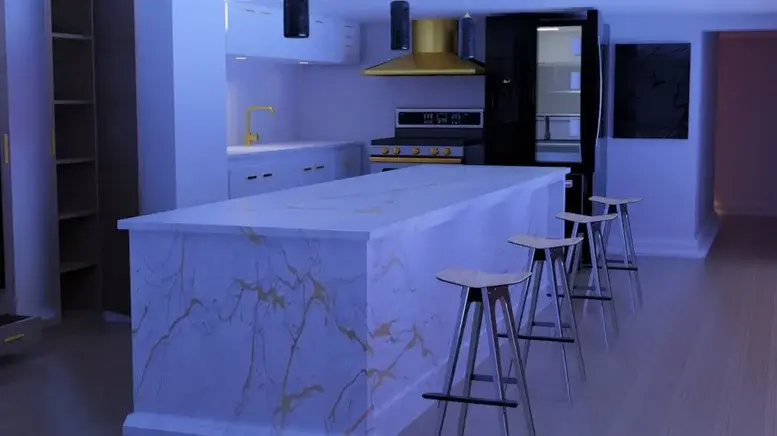
The residential segment dominates with 67% market share in 2024, supported by growing adoption in various applications due to hygiene and durability benefits. Homeowners increasingly view countertops as both a functional surface and a design statement, prioritizing durability, ease of maintenance, and esthetics. Premium finishes appeal strongly to those seeking modern esthetics and businesses aiming to align interiors with brand identity.
Rental Rate Premium Data
Quartz countertops can increase property values by 3% to 7%. For a CAD 500,000 multi-suite property, this translates to CAD 15,000 to CAD 35,000 in added value. Homes featuring quartz countertops often fetch higher resale values, making them a wise investment for those considering selling their property.
Properties featuring quartz countertops consistently outperform those with traditional materials in both occupancy rates and tenant retention. Vacancy periods shrink noticeably when quartz is part of the package. High-occupancy rates become the norm as prospective renters touring multiple properties often make decisions based on these quality indicators.
Quartz vs Laminate Countertops Pros and Cons for Investors
Quartz delivers superior return on investment through extended lifespan and reduced replacement frequency. The material lasts 25 to 30 years with basic care and actively adds to property resale value. Laminate generally has a shorter lifespan of 10 to 15 years, and buyers often view it as a budget-friendly fix rather than a premium, long-term feature.
Premium quartz surfaces attract quality tenants willing to pay higher rent for updated finishes. White quartz countertops have universal appeal and coordinate easily with various cabinet colors, flooring styles, and décor trends. Versatility means property investors can achieve a designer look that remains timeless year after year.
Tenant Retention Statistics
Tenants in units with premium finishes like quartz tend to stay longer. This reduced turnover saves property owners significant costs in marketing, cleaning, and vacancy periods. Most property owners find their quartz investment pays for itself within a few years through combined benefits of higher rents, longer tenant retention, and reduced maintenance costs.
Properties have been available for rent twice, and both times received multiple applications from extremely qualified tenants. This means choice when selecting tenants and maintaining consistent occupancy. Equally important, providing tenants with functional and beautiful spaces encourages them to respect the property and take pride in their living environment.
Conclusion
By and large, quartz countertops deliver measurable advantages for Calgary multi-suite developments despite higher upfront costs. The 2026 data clearly shows that durability, minimal maintenance, and tenant appeal translate directly into stronger financial performance. Your investment pays for itself within a few years through reduced maintenance calls, fewer replacement cycles, and consistent rental premiums.
The choice between quartz and laminate ultimately comes down to whether you’re optimizing for initial budget or long-term profitability. At any rate, developers prioritizing lifecycle costs over purchase price consistently choose quartz for multi-suite properties in 2026. The numbers support what property managers already know: quartz simply performs better under rental conditions.